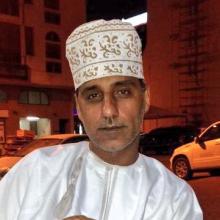
On 28 May 2017, nine journalists prosecuted in the “Raba’a Operations Room” mass trial were included in a new “terrorist list” issued by the Egyptian authorities. The document was published 20 days after the issuance of their final judgment: while five of them were released, four – Abdullah Alfakharany, Samhy Abdulalim, Mohamed Aladili and Youssouf Talat Abdulkarim – remain in detention at Al Aqrab prison.

In September 2015, after the first review of Iraq, the United Nations Committee on Enforced Disappearances (CED) issued three priority recommendations that the country should implement within one year to ensure compliance with the UN Convention on Enforced Disappearances (

The UN Working Group on Arbitrary Detention (WGAD) has issued a decision calling the detention of Ahmad Al Alwani, opposition member of the Iraqi Council of Representatives, arbitrary since he “was targeted and discriminated against for his Sunni background and political opinions and activities”.  Al Alwani had been arrested in December 2013 and secretly detained for a month during which he was tortured in order to force him to sign a self-incriminating statement.

On 18 July 2017, Alkarama was informed that Bahraini human rights defender and lawyer Ebtisam Al Saegh was allegedly charged with “using human rights work as a cover to communicate and cooperate with Al Karama Foundation to provide them with information and fake news about the situation in Bahrain to undermine its status abroad”.

Between 12 and 15 June 2017, the Palestinian Authority’s (PA) Public Prosecutor issued orders to block access within the West Bank to at least 12 news websites*. Since then, people in the West Bank have been unable to access them. All targeted news agencies websites are believed to convey voices critical to the Palestinian Authority, raising concerns that this measure aims at restricting free speech.

Ramsi Suleiman, a 39-year-old pharmacist in Amman, had been missing since his arrest by a group of General Intelligence Directorate (GID) agents on 23 May 2017. After the authorities refused to provide any information on his fate and whereabouts for about two months, on 16 July, his lawyer, who had come numerous times to the GID premises to inquire about him, was allowed to meet with him for the first time.  

On 19 June 2017, the High Military Court upheld on appeal the death sentence of seven men in the Kafr Al Sheikh Stadium bombing case. The men had been sentenced to the capital punishment in 2016 following a flawed trial solely based on statements obtained under brutal torture and testimonies of State Security officers. Should their sentence be carried out, their executions would be summary and constitute a severe violation of Egypt’s human rights obligations.

The “Kafr Al Sheikh Stadium bombing” case

Between late 2011 and March 2012, Iraqi security forces arrested numerous individuals believed to be close to former Vice President Tariq Al Hashimi, a leading figure of the opposition. Following severely flawed trials during which confessions extracted under torture were admitted into evidence, they were sentenced to death by the Central Criminal Court under the Anti-Terrorism Law.

In view of the follow-up to the third periodic review of Tunisia by the Committee against Torture (CAT), Alkarama submitted to the Committee its evaluation report on the implementation of the priority recommendations issued by the experts following the review of May 2016.

Salaheddine Bassir, a militant and journalist, was arrested in June 2015, tortured and jailed in Laayoune following an unfair trial. The experts of the UN Working Group on Arbitrary Detention (WGAD), said “he is arbitrarily detained” and called on the Moroccan authorities to release him. Today Bassir remains detained in the prison of Aït Melloul under particularly appalling conditions.

Arbitrary arrest and unfair trial