“Over the course of 2017, the Arab region has once again been the scene of the most serious human rights violations. While there are still no credible peace processes underway in the countries with open armed conflicts such as Iraq, Libya, Syria and Yemen, most other countries in the region are, to varying degrees, witnessing rising tensions with their neighbours. Coupled with foreign military intervention, this situation has wreaked havoc on the safeguard of the most fundamental human rights across the region.”

On March 24, 2018, while travelling by train to visit family in Asyut, Fatma Mohamed Diyaaeldien Mousa Mohamed was abducted along with her husband, Abdullah Mohamed Modar Mousa Mohamed, her brother, Omar Mohamed Diyaaeldien Mousa Mohamed, and her one-year-old daughter, Alyah Abdullah Mohamed Modar Mousa Mohamed. The family remains disappeared to date, with their relatives having received no information on their whereabouts.

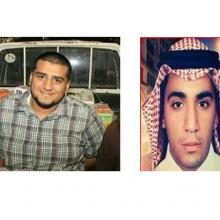
In January and February 2018, well-known Saudi activists Issa Al Nukheifi and Abdullah Al Attawi were sentenced to six and seven years’ imprisonment, respectively, following highly unfair trials as a result of their peaceful activism.

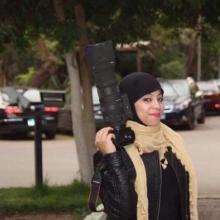
Throughout February and March 2018, Iraqi human rights defenders Faisal Al Tamimi and Iyad Al Roumy have been subjected to threats and attacks in retaliation for speaking out against the practice of enforced disappearances in the country and for calling on Iraq to join the International Criminal Court (ICC).

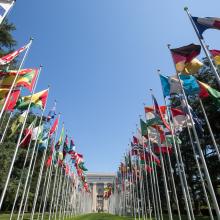
On March 16, 2018, as part of a larger Statelessness Committee of NGOs and academic partners, the Alkarama Foundation participated in a side event organised in the context of the 37th session of the Human Rights Council in Geneva to discuss the current situation of statelessness, restrictive nationality laws and the revocation of citizenship in the Gulf.

On March 10, 2018, Islam Elsayed Mahfouz Salem Khalil, a 29-year-old sales manager from the Gharbia Governorate, was abducted while driving his car in the city of Aswan. He remains disappeared to date.

Prior to his abduction, Khalil called a family member at 8 p.m. to inform him that he was in Aswan. It is believed that he was abducted at one of the numerous checkpoints in Aswan under the control of both the police and the military.

On March 14, 2018, the Alkarama Foundation participated in a side event organised by Conseil pour la Justice, l'Égalité et la Paix (COJEP) and the International Centre for Justice and Human Rights (ICJHR) at the Palais des Nations in Geneva to discuss the current human rights situation in the United Arab Emirates (UAE).

Faced with the threat of extradition from Morocco to Egypt, Egyptian journalist Hany Khater announced his intention to go on hunger strike from March 14, 2018 to protest against his recent transfer to a high security institution.

March 17, 2018 marks one year since Osama Al Najjar completed his three-year prison sentence in the UAE, yet the well-known blogger and human rights defender remains detained against his will to date.

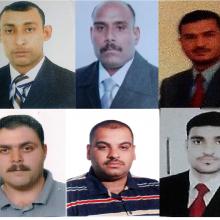
On January 15, 2018, Alkarama sent a communication to the United Nations Working Group on Arbitrary Detention (WGAD) requesting that the UN experts call upon the Iraqi authorities to immediately release 24 individuals* arbitrarily detained as a result of their real or perceived link with former Vice-President Tariq Al Hashimi.