
In a deeply concerning report, the United Nations High Commissioner for Human Rights presents a stark assessment of the situation in the occupied Palestinian territories since 7 October 2023.
According to the UN body, the period has been characterized by an unprecedented rise in violations of international humanitarian law and international human rights law, linked to policies and practices implemented by Israel in the Gaza Strip and the occupied West Bank, including East Jerusalem.
The report notes that military operations carried out in Gaza have resulted in a catastrophic civilian toll, with women and children among the most affected. It further states that these operations have caused extensive damage to critical civilian infrastructure, including residential buildings, hospitals, schools, and water and electricity systems, severely undermining the population’s ability to meet basic living needs.
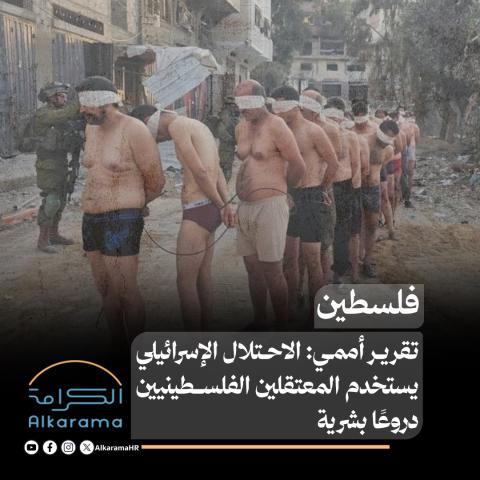
The United Nations also refers to allegations that Palestinian detainees were compelled to move ahead of Israeli forces in order to shield them from possible attacks, a practice that may constitute the use of human shields. The report further indicates that certain detainees may have been held for the purpose of future prisoner exchanges, a situation that could amount to hostage-taking under international law.
According to the High Commissioner, repeated evacuation orders, ongoing military operations, and restrictions affecting both civilian movement and the delivery of humanitarian aid have led to large-scale internal displacement throughout Gaza. The report finds that these displacements occurred under conditions that fall short of the protection standards required of an occupying power under international humanitarian law.
The report also draws attention to the combined impact of the blockade, military activities, and the destruction of civilian infrastructure, which have produced extremely harsh living conditions across significant parts of the territory. As a result, large segments of the population have reportedly been deprived of access to essential services, healthcare, safe drinking water, food, and adequate housing.
From a legal standpoint, the report concludes that the means and methods employed during military operations raise serious questions regarding compliance with the core principles of international humanitarian law, including distinction, proportionality, and precaution. It further states that some of the violations documented may amount to war crimes or other serious international offences requiring investigation and accountability.
Regarding the occupied West Bank, including East Jerusalem, the report documents the continued expansion of Israeli settlements alongside a rise in attacks by settlers against Palestinians, their property, and agricultural lands. It also records home demolitions, land seizures, and other measures that have resulted in the displacement of a number of Palestinian communities from their long-established places of residence.
The High Commissioner reiterates that the establishment and expansion of settlements, as well as the transfer of the occupying power’s civilian population into occupied territory, are prohibited under international humanitarian law, notably under the Fourth Geneva Convention.
The report emphasizes that these practices cannot be examined in isolation from the broader context of a decades-long occupation. According to the United Nations, their continuation further undermines the fundamental rights of the Palestinian people, including the right to self-determination, equality, non-discrimination, and a life lived in dignity and security.
In its concluding observations, the United Nations calls for full respect for international humanitarian law and international human rights law. It urges an end to serious violations affecting Palestinian civilians, the termination of policies leading to forced displacement and settlement expansion, the unhindered delivery of humanitarian assistance, and the adoption of effective measures to ensure accountability for the documented violations.
The report is regarded as one of the clearest and most direct UN assessments of the legal and humanitarian consequences associated with the Israeli occupation. It finds that the scale of destruction, displacement, and deprivation experienced by Palestinians during the reporting period raises profound concerns about conduct that may constitute serious breaches of international law and fall within the scope of international criminal responsibility.
For many years, Alkarama has continued to document serious violations committed in the occupied Palestinian territories and to bring them before international human rights mechanisms.
In particular, Alkarama has focused on exposing the consequences of military operations in Gaza, including attacks on civilians, the blockade, famine-related conditions, and the systematic destruction of civilian infrastructure. Alkarama has also joined a number of collective initiatives and statements urging the international community to take meaningful action to end violations committed against Palestinians and to address the ongoing lack of accountability.