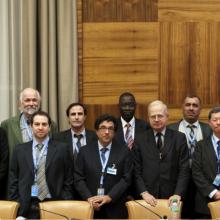
At the launch of its annual report in Geneva on 26 March, Alkarama chastised Arab States for trying to undermine, not only the United Nations human rights system, but also Arab civil society, all this under the pretext of countering terrorism, a label that has become the weapon of choice for authoritarian regimes to stifle criticism.

On 26 March 2015, Alkarama sent a communication to the United Nations Human Rights Committee (HRCtee) regarding the retaliatory measures taken by the Algerian authorities against some families from the region of Jijel who had sent individual complaints to the Committee following the enforced disappearance or summary execution of their relatives in the 1990s.

On 24 March 2015, Alkarama sent an appeal to United Nations Special Rapporteur on Torture (SRT) regarding the case of Ammar Mohammed Mohammed Mahmoud, a 19 year-old Egyptian student who has been subjected to various acts of torture since his arrest in November 2014. Detained in deplorable conditions inside Tora prison, Ammar remains at high risk of torture and has not been brought before a judge yet.

On 20 March 2015, UPR Info and a group of 46 NGOs, including Alkarama, called upon UN Member States to focus on the quality and not the quantity of recommendations issued during the Universal Periodic Review (UPR), which should be stronger and more specific.

On 2 March 2015, Alkarama sent a communication to the United Nations Working Group on Enforced or Involuntary Disappearances (WGEID) concerning the cases of two Syrian citizens disappeared from Homs. Both were arrested by members of the Syrian security forces.

On 20 March 2015, the Human Rights Council (HRC) adopted the outcome of Egypt's Universal Periodic Review (UPR), a process aimed at reviewing the human rights record of all UN Member States by every four years. In a context of serious and gross human rights violations in the country, the Egyptian authorities have accepted many of the HRC's recommendations regarding civil and political rights as well as economic, social and cultural ones.

On 3 March 2015, Alkarama and Human Rights Guardians sent a communication to the United Nations Working Group on Enforced or Involuntary Disappearances (WGEID), regarding the disappearance of three Syrian citizens in Latakia between August 2011 and August 2012 following their arrest by members of the Security Forces.

On 12 March 2015, Alkarama sent an urgent appeal to the United Nations Working Group on Enforced Disappearances (WGEID) regarding the enforced disappearances of Ibrahim Ahmed Shaker, aged 20, Serag Eldin Ali Awad Abdel Mawla, 17, Metwally Abou Al Majd Suleiman Mohamed, 45 and his son Hisham Metwally Abou Al Majd Mohamed, 18.

On 8 March 2015, Omani human rights defender, Said Jadad was condemned to three years imprisonment by Muscat's Court of First Instance. Jadad is also still waiting for another trial before the Court of Salalah, which could subject him to further sanctions. While the criminal procedures against him in Muscat are based on the overly broad incrimination of "harming the State's prestige," the charges brought against him in Salalah are targeting his peaceful criticism of the State's repressive policies on social media.

Subscribe to