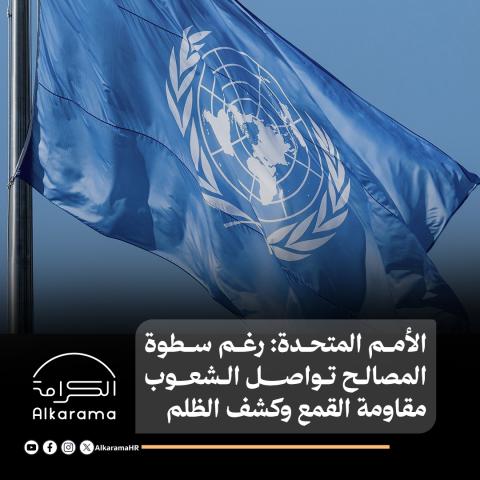
Two senior United Nations officials have called for the Organisation to turn its human rights commitments into meaningful improvements in people's lives, against a backdrop of escalating conflicts, deepening humanitarian crises and persistent discrimination worldwide. They made these remarks during their respective addresses to the General Assembly's Third Committee, which is responsible for social, humanitarian and human rights matters. The speakers were the President of the General Assembly, Khalil Rahman, and the UN High Commissioner for Human Rights, Volker Türk.
The President of the General Assembly urged the United Nations to put people, rather than procedures, at the centre of its work. He stressed that the Organisation's effectiveness should not be judged by the number of resolutions it adopts alone. “The true measure of this Committee's work is not how many resolutions it adopts, but whether they make a real difference to the lives of people and communities,” he said.
High Commissioner Volker Türk, for his part, called for stronger and more determined action in a world increasingly shaped by polarisation, armed conflict, climate disruption and rapid technological change. He warned that powerful interests were fuelling the perception that democratic backsliding and environmental destruction were inevitable. Yet, he stressed, “history tells a different story: people continue to resist oppression, expose injustice and stand up for universal values”.
The High Commissioner further warned that more than 60 armed conflicts were currently taking place worldwide, the highest number since the end of the Second World War. He drew attention to the rising civilian death toll and attacks on civilian infrastructure in Ukraine, the widening conflict in Yemen, the ongoing war in Sudan, renewed hostilities in northern Ethiopia and the continued loss of civilian lives in Gaza, despite the announcement of a ceasefire. He also referred to airstrikes in Myanmar and the plight of more than one million Rohingya refugees, who still have no prospect of returning home safely.
Volker Türk also emphasised that upholding human rights means ensuring that everyone is equal before the law. He cautioned against attempts by powerful States to secure special treatment for themselves, stressing that any departure from the universality of human rights threatens not only those States directly affected, but the international community as a whole. “The law is not optional; it is an essential safeguard for justice and security,” he stated.
Alkarama: A longstanding commitment to defending victims
These appeals from the United Nations reflect the principles that have guided Alkarama since its establishment: placing the individual at the heart of its human rights work across the Arab world. For more than two decades, Alkarama has documented cases of enforced disappearance, arbitrary detention, torture and extrajudicial execution, bringing complaints on behalf of victims and their families before United Nations mechanisms. These include the Working Group on Arbitrary Detention, the Working Group on Enforced or Involuntary Disappearances, Special Rapporteurs and treaty bodies. Alkarama also contributes to the Universal Periodic Review process. Through this work, the organisation helps bridge the gap between international commitments and the realities on the ground, turning documented violations into concrete action before the relevant international bodies, with sustained follow-up and continued efforts to secure justice and redress.
Alkarama's work extends beyond documenting violations and pursuing cases through international mechanisms. The organisation also promotes a culture of human rights through its reports, statements and awareness-raising campaigns. It works to strengthen the capacity of lawyers, activists and journalists to engage with international protection mechanisms, while supporting victims and their families in bringing their voices before United Nations bodies.
In a region where conflict and repression continue to intensify while the space for freedom of expression steadily narrows, Alkarama remains committed to ensuring that international law serves as an effective safeguard rather than a mere statement of principle. The organisation reiterates its call for accountability for human rights violations and effective remedies for victims, an end to impunity, the release of all persons arbitrarily detained, clarification of the fate of those subjected to enforced disappearance, and protection for journalists and human rights defenders against prosecution and intimidation. It also calls for stronger and more effective cooperation between governments, United Nations mechanisms and civil society.