
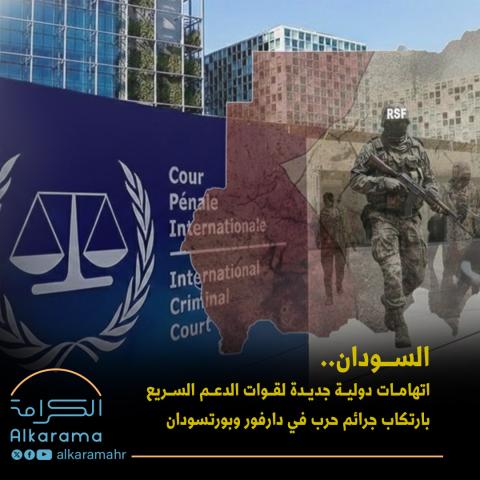
Nazhat Shameem Khan, Deputy Prosecutor of the International Criminal Court, stated that, based on the information and evidence gathered by the Court, the Office of the Prosecutor considers that war crimes and crimes against humanity were committed in El Fasher, in the Darfur region, particularly toward the end of October.
In her address to a United Nations Security Council meeting on the situation in Darfur, Shameem Khan warned that the region is currently “experiencing collective torture,” underlining that the seizure of El Fasher by the Rapid Support Forces has been accompanied by an organized and systematic campaign of severe suffering, with non-Arab communities being particularly targeted. She detailed that these violations encompassed rape, arbitrary arrests, executions and the existence of mass graves, emphasizing that the crimes were carried out on a large scale and in a systematic manner.
Shameem Khan further noted that videos analyzed by the Office of the Prosecutor reveal patterns consistent with crimes previously documented in other parts of Darfur, including the detention of individuals from non-Arab tribes, their mistreatment, and extrajudicial killings. Some footage even shows members of the Rapid Support Forces celebrating summary executions before desecrating the bodies.
Sexual Violence as a Weapon of War
Regarding the events that took place in the city of Al Geneina in 2023, Shameem Khan noted that investigations revealed attacks on camps for internally displaced persons, looting, arbitrary targeting of civilians, arrests, gender-based crimes and offenses against children.
She further stated that evidence indicates the patterns of atrocities observed in Al Geneina in 2023 were repeated in El Fasher in 2025, highlighting that these crimes recur from city to city across Darfur amid ongoing conflict and persistent impunity.
Shameem Khan stressed that sexual violence, including rape, is being employed as a weapon of war in Darfur and emphasized that the systematic and thorough investigation of these crimes will remain a key priority for the International Criminal Court in the coming years.
United Nations Warnings Amid Worsening Humanitarian Catastrophe
These statements come after a warning from United Nations High Commissioner for Human Rights, Volker Türk, who said that the war in Sudan has plunged the country into an abyss of unimaginable dimensions, asserting that human rights must be at the core of any initiative aimed at ending the war and rebuilding Sudan.
During a press conference in Nairobi following a five-day visit to Port Sudan and the North, Türk stated that the war affects every part of the country and every citizen, highlighting the scale of human suffering.
He assured that the spirit of the struggle for peace, justice, and freedom has not been broken, despite nearly three years of conflict.
Targeting of Civil Infrastructure
The High Commissioner also warned against repeated attacks on civilian infrastructure, including the Merowe Dam, which provided approximately 70% of Sudan’s electricity and was struck by drones of the Rapid Support Forces.
He noted that these attacks disrupt the functioning of hospitals, irrigation networks and access to drinking water, contributing to the spread of disease and worsening humanitarian suffering, while emphasizing that these aggressions could constitute war crimes under international humanitarian law.
Türk concluded that Sudan, despite all these challenges, continues to demonstrate a strong will for resilience and the pursuit of a future of peace and justice.
Alkarama’s Activism
In recent years, Alkarama has closely monitored a broad range of serious violations carried out by the Rapid Support Forces across various regions of Sudan. It has documented recurring patterns of crimes, including abductions, enforced disappearances, torture and other forms of ill-treatment targeting civilians, activists and individuals suspected of opposing the authorities.
The investigations and testimonies collected by Alkarama show that these violations are not isolated incidents but part of systematic practices intended to instill fear and suppress dissenting voices, in clear violation of both international human rights law and international humanitarian law.